
 English
 日本語
日本語
 русский
 Español
 عربى
عربى
 italiano
Content
- 1 Introduction to Rotational Components in Material Handling
- 2 Structural Engineering and Design Differences
- 3 Load Capacity and Moment Forces
- 4 Material Selection and Manufacturing Standards
- 5 Maintenance and Troubleshooting for Industrial Users
- 6 Industry Applications: Why Forklift Type Matters
- 7 Conclusion
- 8 FAQ
- 9 References
Introduction to Rotational Components in Material Handling
In the demanding world of material handling, forklifts are no longer just simple lifting machines. They have evolved into multi-functional industrial tools equipped with complex attachments like rotators, paper roll clamps, and side-shifters. At the heart of these rotating attachments lies a critical mechanical component: the rotational bearing. While the terms Slewing Ring and Turntable Bearing are often used interchangeably in casual conversation, they represent distinct engineering approaches to managing high-capacity axial, radial, and moment loads.
Choosing the right rotational component is not merely a matter of mechanical fit; it is a decision that impacts the equipment’s safety, load-bearing efficiency, and long-term operational costs. This article provides a comprehensive technical analysis of these two components, specifically tailored for the forklift manufacturing and export industry, focusing on their structural differences, load capacities, and application-specific advantages.
Structural Engineering and Design Differences
The primary distinction between a forklift slewing ring and a standard turntable bearing lies in their integrated functionality and cross-sectional profile.
1. Gear Integration
A defining feature of a slewing ring is the integration of gear teeth. These teeth can be cut directly into either the inner or the outer ring, allowing the bearing to act as both a support element and a transmission component. In forklift rotators, this eliminates the need for a separate large gear, saving space and weight. Conversely, turntable bearings are frequently ungeared, acting purely as a rotational support while relying on external drive mechanisms.
2. Bolt Hole Configurations
Slewing rings are designed for “shaftless” mounting. Instead of fitting onto a central spindle, they feature a series of precision-drilled mounting holes across the faces of both the inner and outer rings. This allows the bearing to be bolted directly to the flat surface of the forklift carriage or the attachment frame. This design distributes the stress of heavy loads across a larger surface area compared to traditional small-diameter bearings.
3. Profiles and Dimensions
Slewing rings typically feature a much thinner cross-section relative to their diameter. For forklift applications, where every millimeter of “lost load center” (the distance from the forklift carriage to the center of the load) reduces the truck’s lifting capacity, the slim profile of a slewing ring is a significant engineering advantage.
Load Capacity and Moment Forces
Forklift attachments operate under a complex “load spectrum.” When a forklift carries a 3-ton paper roll and rotates it 90 degrees, the bearing is subjected to three distinct types of forces simultaneously:
- Axial Load: The vertical weight of the attachment and the cargo.
- Radial Load: The horizontal force generated during movement or if the load is tilted.
- Tilting Moment Load: The “leverage” force created when the load is extended away from the center of rotation.
| Performance Metric | Standard Turntable Bearing | Heavy-Duty Slewing Ring |
|---|---|---|
| Primary Load Direction | Mainly Axial (Vertical) | Combined Axial, Radial, & Moment |
| Moment Load Resistance | Moderate | High (Essential for cantilevered loads) |
| Typical Diameter Range | 100mm - 1000mm | 200mm - 5000mm+ |
| Precision Level | Standard Industrial | High Precision / Specialized Clearance |
| Rotational Speed | Low to Medium | Low (High Torque) |
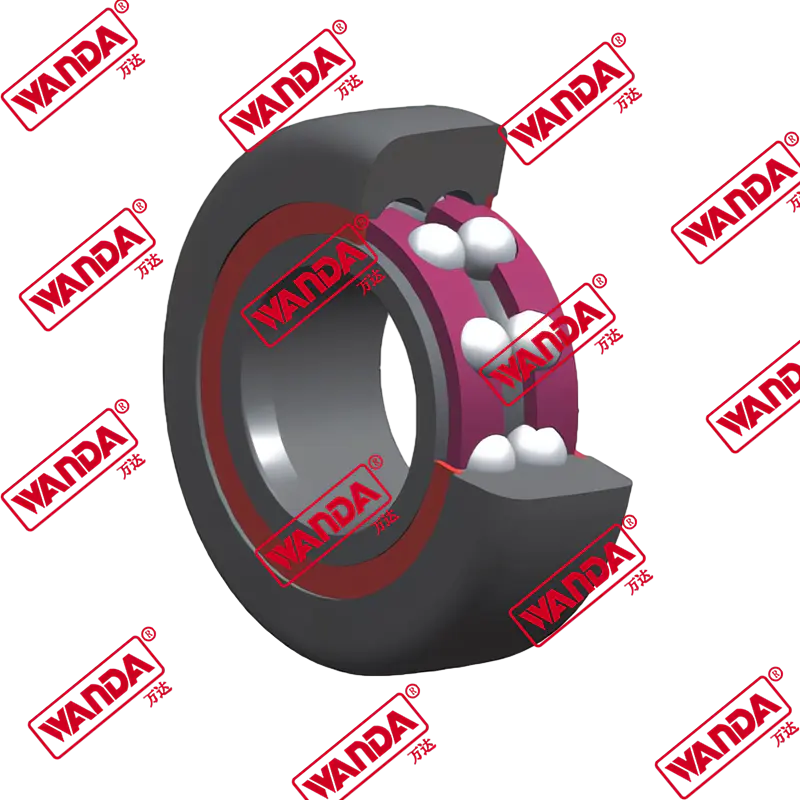
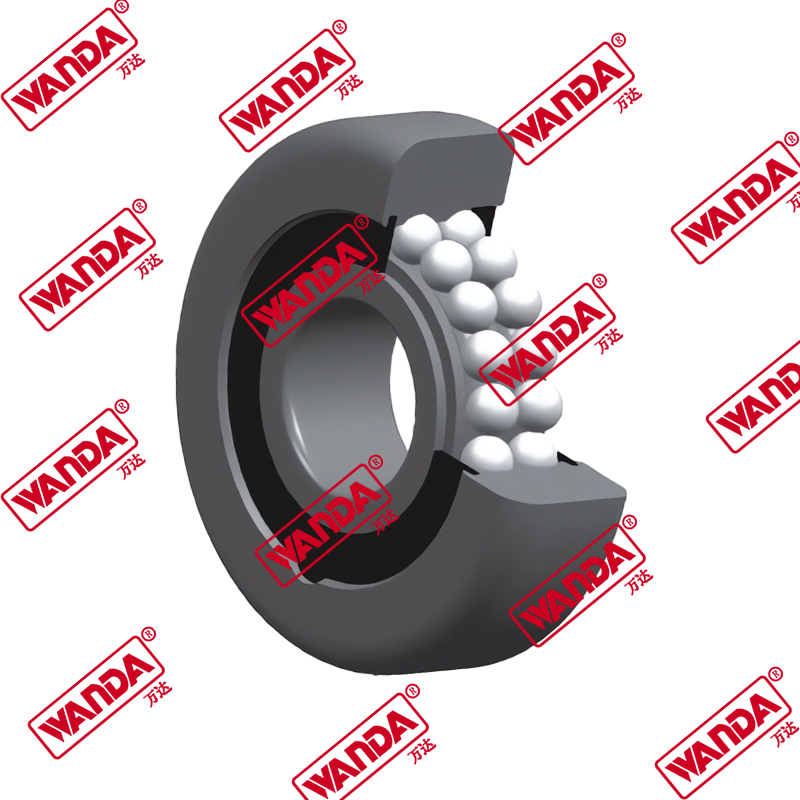
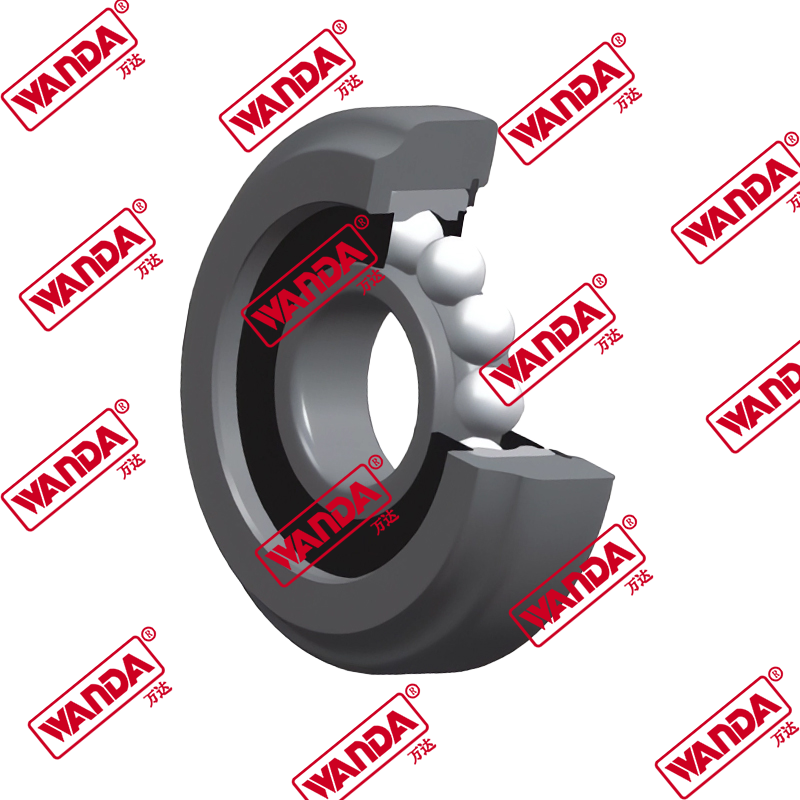
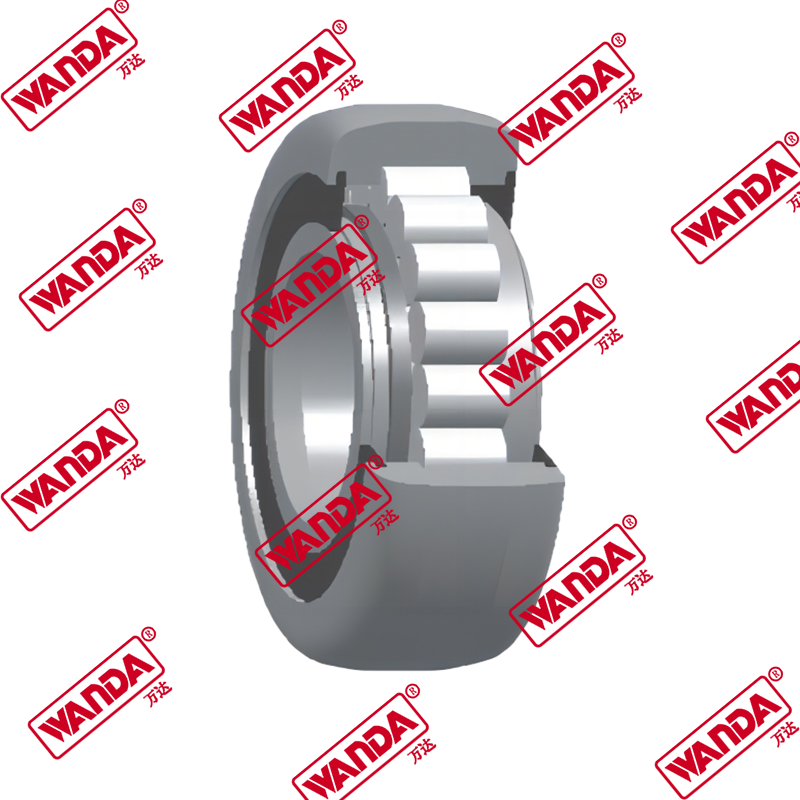
The internal geometry of a slewing ring—often utilizing a four-point contact ball design or crossed rollers—allows it to neutralize these forces efficiently. For heavy-duty forklift attachments, the four-point contact ball slewing ring is the industry standard because it provides the best balance of load capacity and cost-effectiveness.
Material Selection and Manufacturing Standards
To survive the harsh environments of B2B industrial use—such as cold storage, chemical plants, or busy ports—the materials used in forklift slewing rings must meet rigorous standards.
Forged Steel Construction
High-quality rings are typically manufactured from forged 50Mn or 42CrMo steel. Forging ensures a dense, uniform grain structure that can withstand the high surface pressures of the rolling elements without cracking.
Induction Hardening
The raceways (the paths where the balls or rollers travel) undergo induction hardening. This process increases the hardness of the contact surface to HRC 55–62, while the core of the ring remains ductile and tough to absorb shocks. This specialized heat treatment is what separates a “professional-grade” slewing ring from a low-cost alternative.
Sealing and Protection
Forklifts often operate in dusty warehouses or outdoor yards. Professional slewing rings for the export market are equipped with integral NBR (Nitrile Butadiene Rubber) or Viton seals. these seals prevent the ingress of contaminants like metal shavings and dust while retaining the essential lubricant.
Maintenance and Troubleshooting for Industrial Users
The longevity of a forklift slewing ring is directly tied to a rigorous maintenance schedule. Unlike smaller bearings that are simply replaced when they fail, slewing rings are significant capital investments that require care.
1. Lubrication Cycles
Lubrication is the lifeblood of the bearing. For most material handling applications, the “Pressure Grease” method is used. Grease should be pumped into the fittings while the bearing is slowly rotating to ensure even distribution. In high-intensity 3-shift operations, this should occur every 100 to 200 hours of operation.
2. Bolt Torque Verification
Because slewing rings are bolted to structures that flex under load, the mounting bolts can lose their tension over time. A professional maintenance protocol involves checking the torque of all mounting bolts after the first 100 hours of service, and every 500 hours thereafter.
3. Detecting “Play” or Wear
If a forklift operator notices a “rocking” motion in the attachment, it often indicates excessive clearance in the bearing raceway. This can be measured using a dial indicator. If the “tilting clearance” exceeds the manufacturer’s specification (typically a few millimeters depending on the diameter), the bearing may need remanufacturing or replacement to prevent a catastrophic failure.
Industry Applications: Why Forklift Type Matters
The choice of slewing ring often depends on the specific type of forklift and its intended environment:
- Electric Warehouse Forklifts: Require compact, lightweight slewing rings with low rotational torque to conserve battery life.
- Heavy IC (Internal Combustion) Trucks: Used in lumber or steel yards, these require large-diameter, heavy-section rings with high moment-load resistance.
- Explosion-Proof Forklifts: Often used in chemical industries, requiring specialized non-sparking seals and stainless steel or coated components to prevent corrosion and hazardous sparks.
Conclusion
Understanding the technical nuances between slewing rings and turntable bearings is essential for any manufacturing entity looking to optimize their forklift attachment performance. While turntable bearings offer a simpler solution for light-duty tasks, the Forklift Slewing Ring remains the superior choice for high-moment, heavy-duty B2B applications. By prioritizing forged materials, precision induction hardening, and proper maintenance, global exporters can ensure their equipment meets the high reliability standards demanded by the international market.
FAQ
1. Can I replace a turntable bearing with a slewing ring on my existing forklift attachment?
Yes, but it usually requires a modification of the mounting interface. Slewing rings use a bolt-down method, whereas some older turntable arrangements may rely on a central spindle or press-fit.
2. Why do slewing rings for forklifts usually have “internal” gears instead of “external”?
Internal gears are preferred in forklift attachments because they allow for a more compact design and protect the gear teeth and the drive pinion from environmental debris and impact.
3. What is the main cause of premature failure in forklift slewing rings?
Over 90% of failures are caused by improper lubrication or overloading beyond the specified moment-load capacity. Contamination due to damaged seals is the third most common cause.
4. Is a crossed-roller design better than a four-point contact ball design for forklifts?
Crossed-roller slewing rings offer higher stiffness and precision, which is great for high-accuracy positioning. However, for most general forklift rotators, the four-point contact ball design is preferred for its better shock absorption and cost-efficiency.
5. How do I know if the bolts on my slewing ring are the correct grade?
For industrial forklift applications, high-strength bolts (typically Grade 10.9 or 12.9) are mandatory. Using lower-grade bolts can lead to bolt fatigue and bearing separation under load.
References
- Standard for Rotational Bearings in Material Handling Equipment, International Organization for Standardization (ISO).
- Design and Application of Slewing Bearings, Harris & Kotzalas (Advanced Bearing Technology).
- Technical Manual for Industrial Forklift Attachments, FEM (European Federation of Materials Handling).
- Slewing Ring Lubrication and Maintenance Best Practices, National Lubricating Grease Institute (NLGI).
- Load Spectrum Analysis for Mobile Crane and Forklift Components, Industrial Engineering Journal.