
 English
 日本語
日本語
 русский
 Español
 عربى
عربى
 italiano
Content
- 1 The Direct Answer: Load Capacity and Raceway Hardness Dictate Forklift Rotator Bearing Life
- 2 What a Forklift Slewing Bearing Is and Why the Terminology Overlaps
- 3 Slewing Ring Types Applied to Forklift Rotators
- 4 Comparing Bearing Types: Key Specifications at a Glance
- 5 Equivalent Load Calculation and Service Life Estimation
- 6 Gear Tooth Design on Forklift Slewing Rings
- 7 Mounting Bolt Torque and Surface Flatness Specifications
- 8 Lubrication and Maintenance Schedule That Maximises Ring Life
- 9 Troubleshooting Failures: Brinelling, Spalling, and Excessive Backlash
- 10 The Bottom Line: Specify the Bearing for the Entire Rotator Load Spectrum
The Direct Answer: Load Capacity and Raceway Hardness Dictate Forklift Rotator Bearing Life
For any forklift attachment that rotates—clamps, fork rotators, or rotating masts—the slewing ring is the single most heavily loaded component. The decisive selection criterion is the bearing’s dynamic axial load rating and its tilting moment capacity at the actual load centre. A four-point contact ball slewing ring with through-hardened raceways of 58 to 62 HRC, correctly sized so that the equivalent dynamic load does not exceed 25% of the catalogue dynamic capacity, will deliver over 10,000 operating hours under rated service conditions. Undersizing by even one module step reduces service life exponentially and can cause raceway spalling within the first 500 hours of heavy use.
In short, a properly specified slewing ring eliminates attachment pivot failures and maintains rotation accuracy for the economic life of the forklift. All selection decisions flow from accurate calculation of the combined load spectrum.
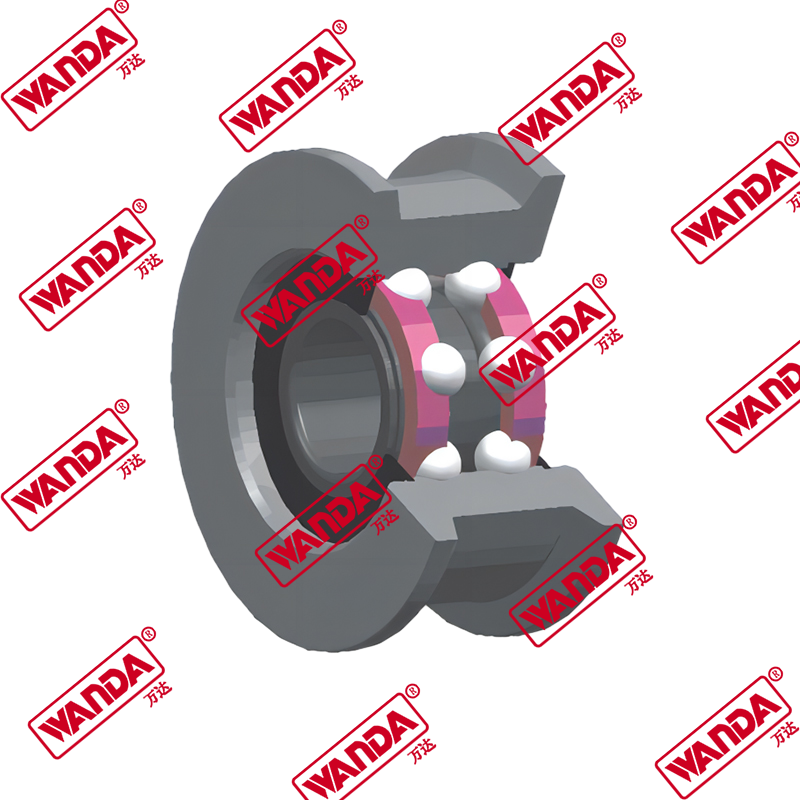
What a Forklift Slewing Bearing Is and Why the Terminology Overlaps
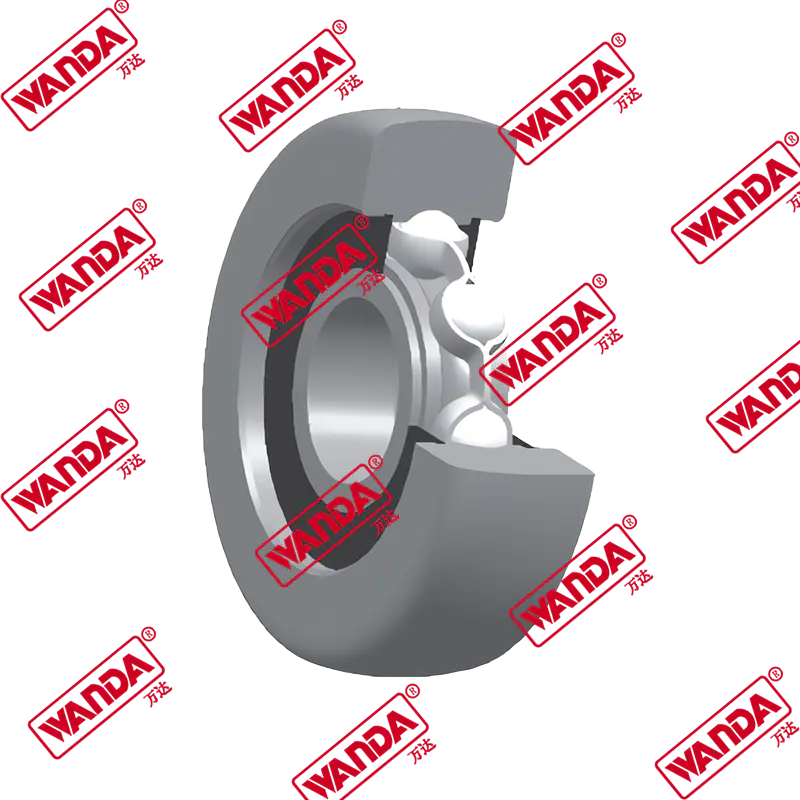
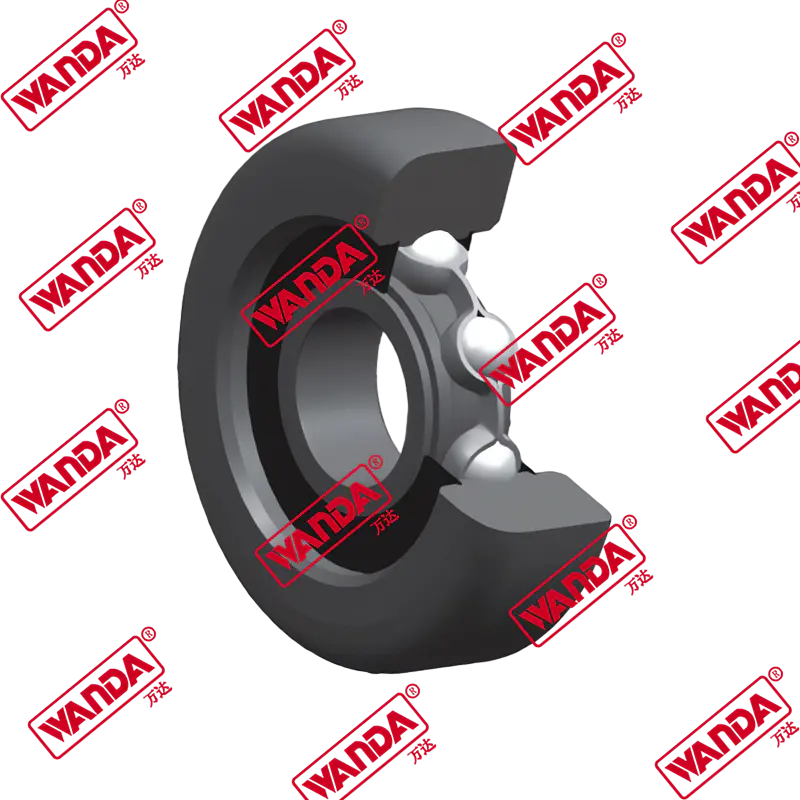
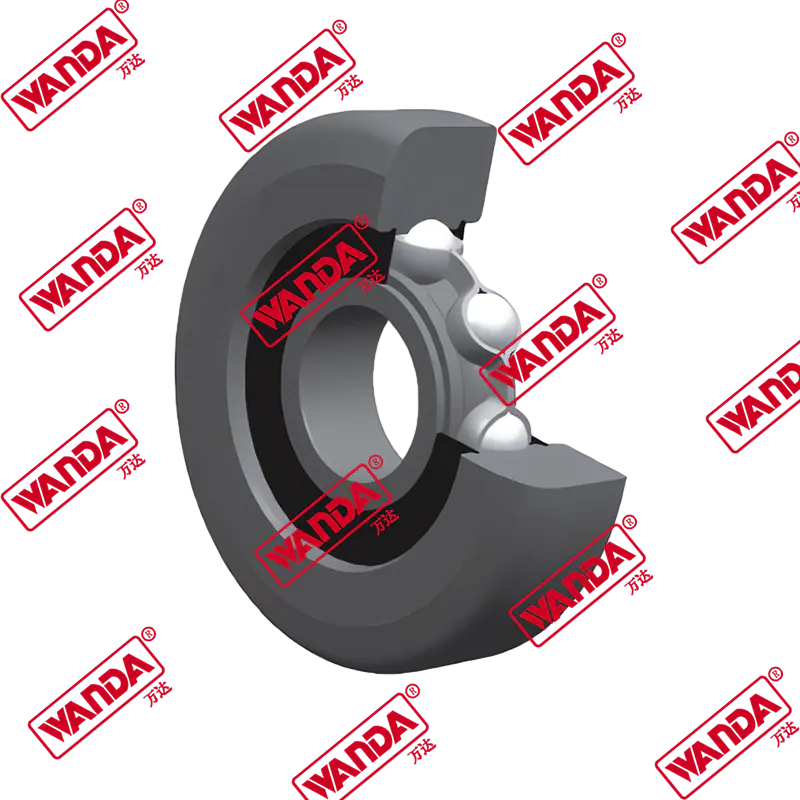
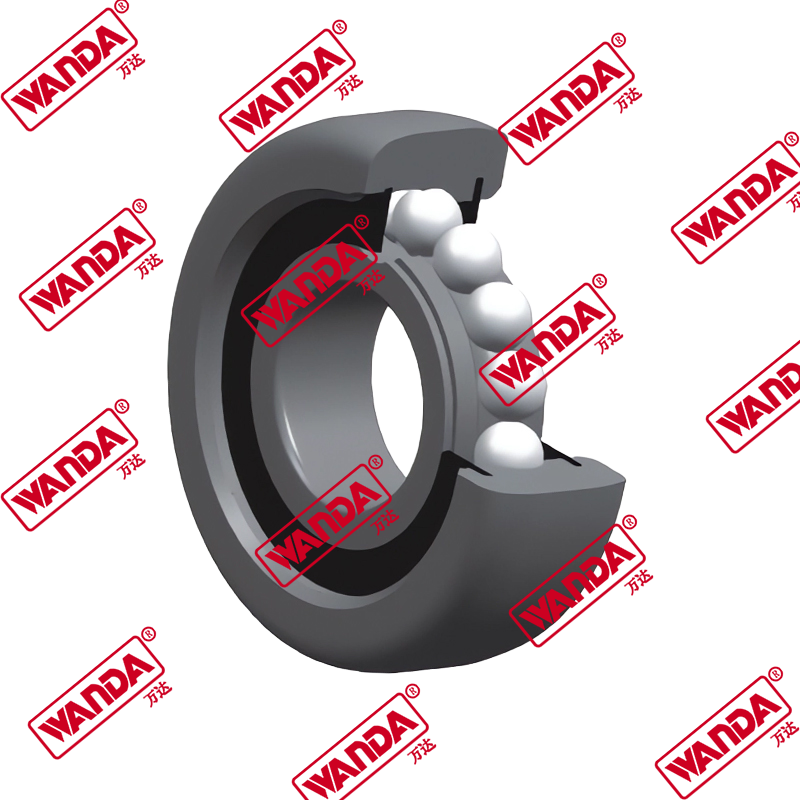
A forklift slewing bearing, also called a slewing ring, is a large-diameter rolling-element bearing that simultaneously handles axial, radial, and tilting moment loads while allowing continuous 360-degree rotation. In the forklift context, it is typically mounted between the carriage plate and the rotating attachment, such as a bale clamp, rotator, or side shift mechanism. The terms slewing bearing and slewing ring are interchangeable in the industry; both refer to the same assembled unit consisting of inner and outer rings with integrated gear teeth, rolling elements, spacer/retainer systems, and seals.
Slewing Ring Types Applied to Forklift Rotators
Single-Row Four-Point Contact Ball Bearing
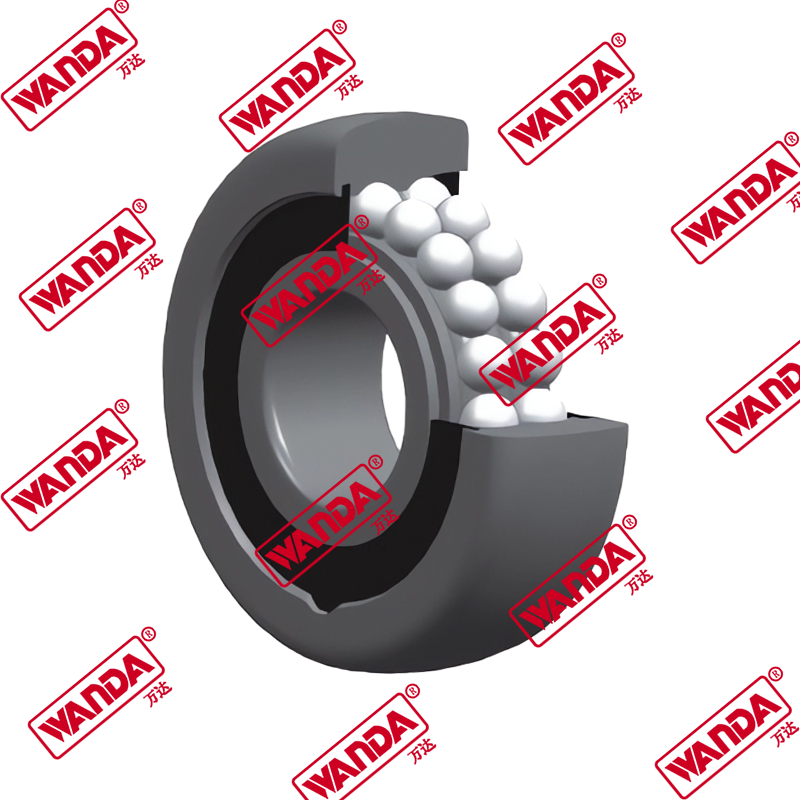
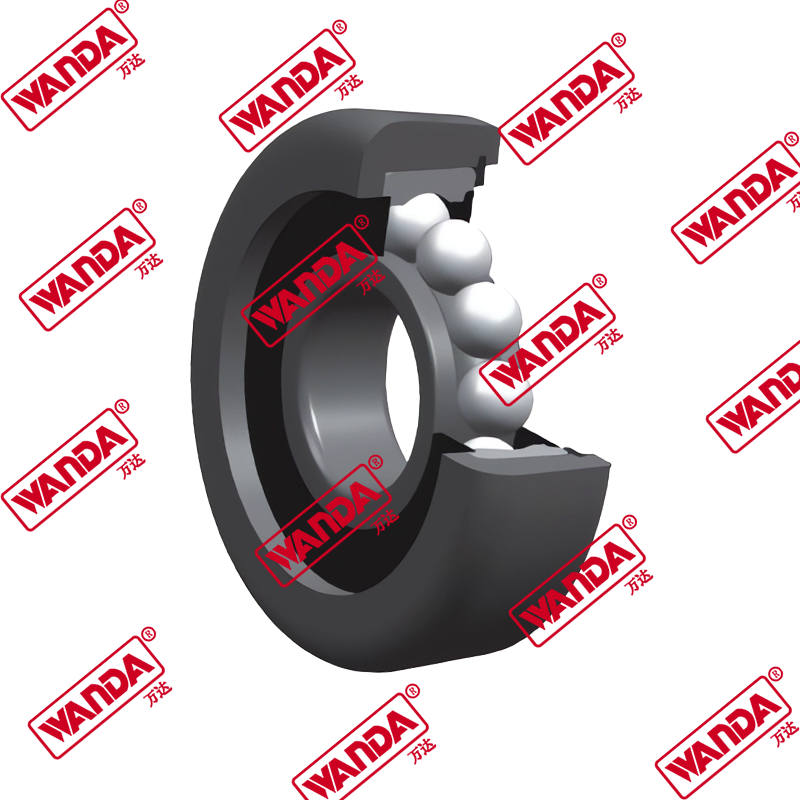
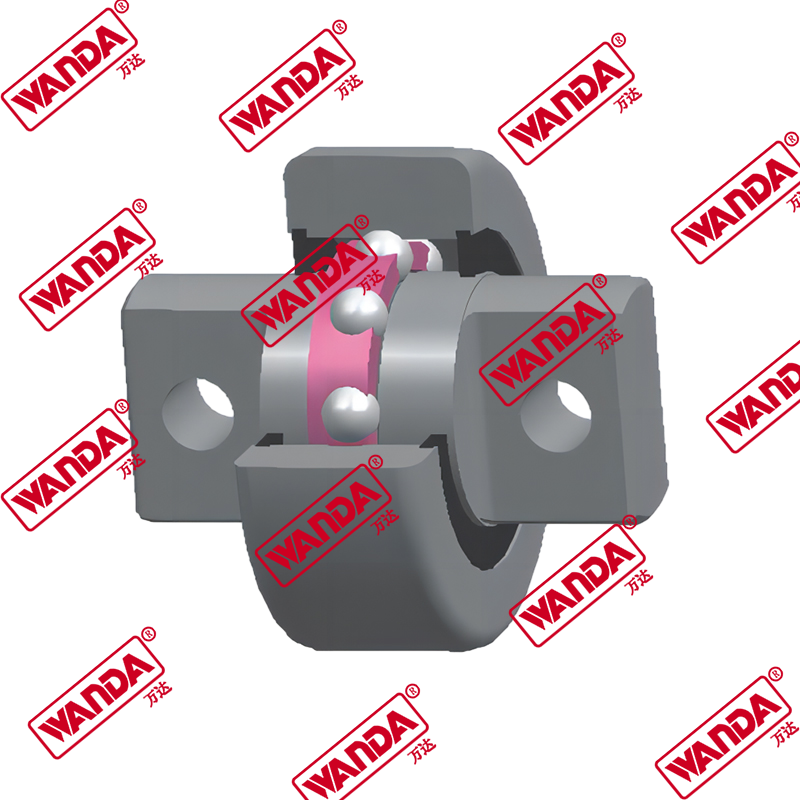
This is the standard choice for clamp and rotator applications on forklifts with capacity up to 10 tonnes. A single row of balls contacts the raceway at four points—two on the inner ring and two on the outer—enabling it to carry axial, radial, and moment loads in any combination. It offers the lowest cost per load capacity, compact cross-section, and the ability to absorb tilting moments up to 40% of the static axial load rating without permanent deformation.
Crossed Cylindrical Roller Bearing
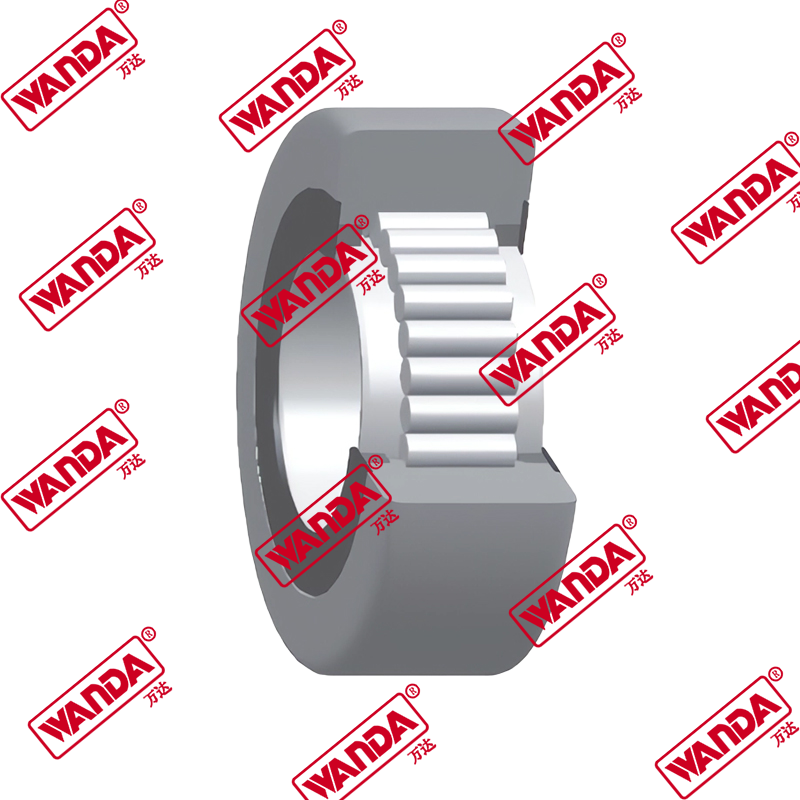
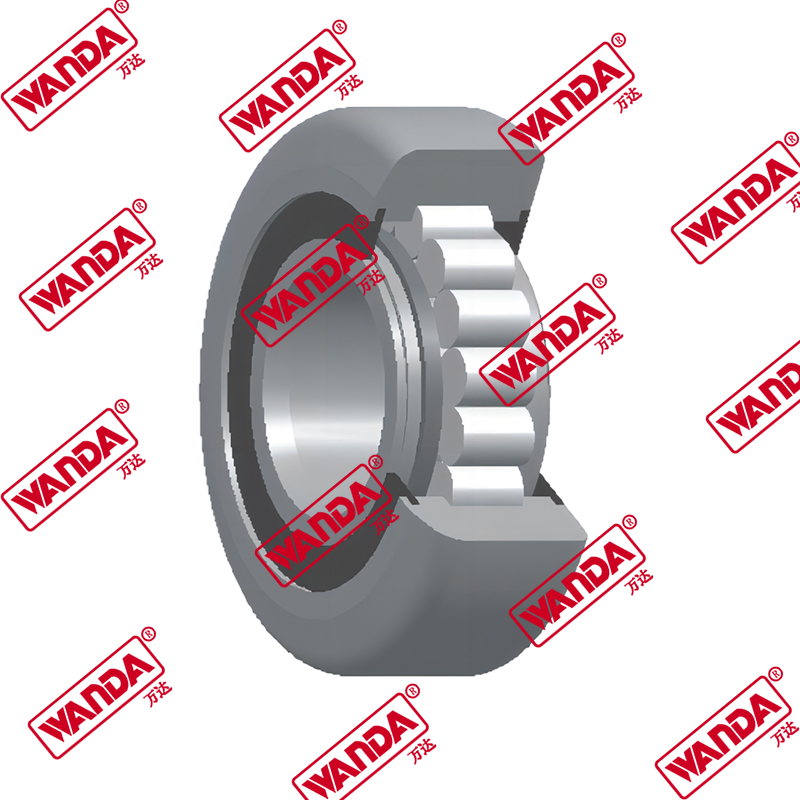
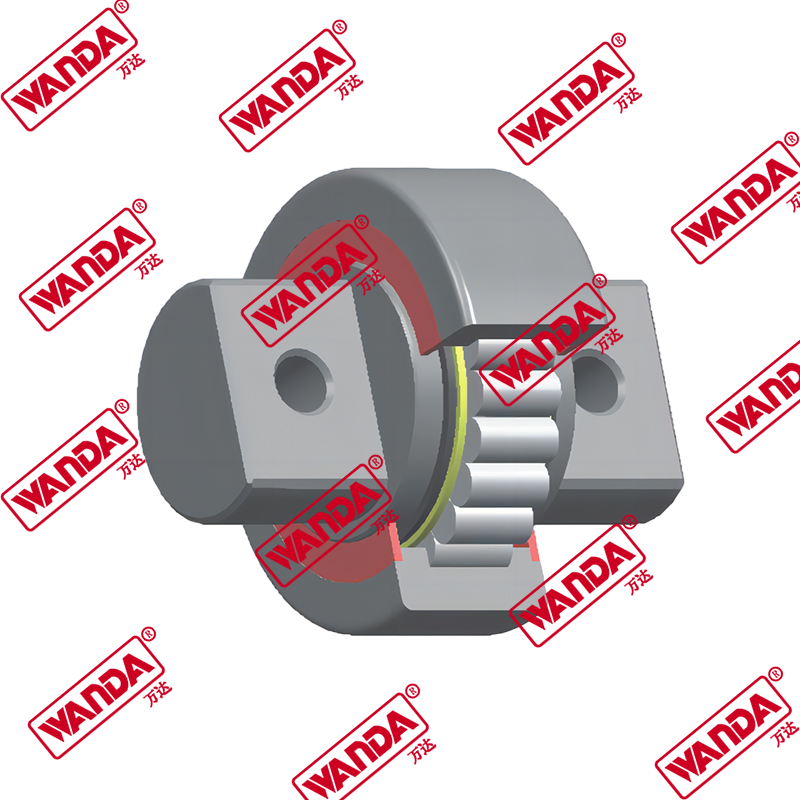
Used on heavy rotators handling loads above 10 tonnes, crossed roller rings replace balls with cylindrical rollers arranged at 90 degrees to each other in a single raceway. This design provides roughly double the tilting stiffness of an equivalent four-point ball ring and a static load rating up to 60% higher for the same envelope size. The trade-off is a higher friction torque and a need for more precise mounting.
Double-Row Ball Bearing with Separate Races
Rarely used on forklift rotators due to the added weight and width, but sometimes found on rotating mast base pivots for very narrow aisle trucks. The two separate rolling rows can be preloaded for zero clearance, giving the highest overturning moment resistance for a given diameter.
Comparing Bearing Types: Key Specifications at a Glance
| Bearing Type | Dynamic Axial Rating (kN) | Static Tilting Moment Limit (kNm) | Suitable Forklift Capacity | Cost Index |
|---|---|---|---|---|
| Four-Point Ball | 240-310 | 38-52 | 2 to 7 tonne | 1.0 (base) |
| Crossed Roller | 380-450 | 95-115 | 8 to 16 tonne | 1.8-2.2 |
| Double-Row Ball | 300-380 | 110-140 | 5 to 10 tonne (special) | 1.6-1.9 |
The four-point ball bearing provides the most cost-effective solution for the vast majority of standard forklift attachments. Crossed roller bearings are reserved for cases where the rotator must withstand severe shock loads, such as in timber handling or foundry operations.
Equivalent Load Calculation and Service Life Estimation
The life of a slewing ring under combined loads follows the standard formula based on the dynamic capacity C and equivalent load P. For a forklift rotator, the tilting moment produced by a load on the forks dominates. The equivalent dynamic load P is calculated as P = Fa + (4.4 x Mk / D) + (2.2 x Fr / 3), where D is the rolling element pitch diameter in metres, Fa is the axial force, Mk the tilting moment, and Fr the radial force. The required dynamic capacity must satisfy C ≥ P x (L₁₀ / 20,000)^(1/3) for ball bearings.
As a rule of thumb, a bearing with a dynamic rating at least 4 times the equivalent load yields an L₁₀ life exceeding 16,000 hours at continuous rotation duty. For intermittent forklift use—typically 15% rotation duty cycle—this translates to a 6- to 8-year service interval before the first raceway spalling appears.
Gear Tooth Design on Forklift Slewing Rings
Forklift rotator slewing rings almost always integrate a spur gear on one ring, typically the outer ring, driven by a hydraulic motor and pinion. Standard tooth modules range from 4 to 8 mm for rings up to 500 mm outer diameter, with induction-hardened tooth flanks to 52–56 HRC and a hardened depth of 1.5–2.0 mm. The pinion is heat-treated to the same hardness and is mounted with an adjustable centre distance to control backlash between 0.15 and 0.30 mm.
When replacement is required, always match the tooth module, pressure angle (typically 20 degrees), and tooth number exactly. Altering the gear ratio changes rotational speed and may overload the hydraulic motor.
Mounting Bolt Torque and Surface Flatness Specifications
Proper mounting is essential to translate the calculated bearing life into reality. Mounting surfaces must be machined flat to within 0.1 mm over a 100 mm span. All bolts should be grade 10.9 or 12.9, tightened in a star pattern to the torque specified by the ring manufacturer, typically between 300 and 550 Nm for M16 bolts used on 350 mm rings. Preload is checked after the first 50 hours of service and annually thereafter. A drop in bolt torque below 80% of the specified value signals joint fretting and the need for immediate retightening.
Lubrication and Maintenance Schedule That Maximises Ring Life
- Grease the bearing raceways every 500 operating hours or every 3 months using a lithium-complex EP2 grease with a base oil viscosity of 150–220 cSt at 40°C.
- Rotate the attachment slowly during greasing to distribute lubricant across the full circumference. Inject grease until fresh lubricant purges from the seals.
- Inspect gear teeth monthly for pitting; apply open gear compound sparingly to the pinion-ring mesh.
- Check axial clearance annually with a dial indicator. An increase of more than 0.3 mm over the initial measurement indicates raceway wear and warrants replacement planning.
Troubleshooting Failures: Brinelling, Spalling, and Excessive Backlash
Brinelling and Raceway Indentation
Static overload or severe impact creates permanent dents in the raceway. Corrective action is to verify that the tilting moment from the load centre does not exceed the bearing’s static moment rating. For a 2-tonne forklift with a 600 mm load centre, the tilting moment can easily reach 35 kNm, which requires a bearing with a static limit of at least 50 kNm.
Spalling and Fatigue Flaking
Progressive flaking usually begins at a depth of 0.2–0.4 mm below the raceway surface due to subsurface shear stress. This failure mode indicates that the actual load spectrum exceeds the design assumption. Reducing the maximum payload or respecifying a larger bearing are the permanent remedies.
Gear Backlash Beyond Service Limit
Backlash exceeding 0.5 mm at the pinion-ring mesh points to tooth wear. If not remedied, the resulting impact loading on the raceways will accelerate bearing fatigue. Replace pinion first, and if backlash persists, replace the geared ring as well.
The Bottom Line: Specify the Bearing for the Entire Rotator Load Spectrum
A forklift slewing ring is a precision machine component whose life is determined by the accuracy of the load calculation made at the specification stage. Select a four-point ball ring with hardened raceways, calculate the equivalent load conservatively using the maximum load centre distance, and maintain a minimum safety factor of 3 on static moment capacity. When followed, these steps eliminate premature rotating attachment failures and ensure the fork position accuracy required for daily pallet handling.