
 English
 日本語
日本語
 русский
 Español
 عربى
عربى
 italiano
Content
- 1 Introduction to High-Performance Cylindrical Roller Bearings
- 2 Core Structural Variants: NU, NJ, NUP, and N Designs
- 3 Comparison of Cage Materials: Brass vs. Steel vs. Polyamide
- 4 Precision Standards and Tolerance Classes (P0 to P2)
- 5 Load Dynamics: Radial vs. Axial Capabilities
- 6 Failure Analysis and Preventive Maintenance
- 7 Manufacturing Excellence: Heat Treatment and Material Purity
- 8 Technical Comparison: Cylindrical vs. Needle Roller Bearings
- 9 FAQ Section
- 10 References
Introduction to High-Performance Cylindrical Roller Bearings
Cylindrical roller bearings are indispensable components in the modern industrial landscape, engineered specifically to handle high radial loads with exceptional rigidity. Unlike standard ball bearings, which rely on point contact, cylindrical roller bearings utilize line contact between the rolling elements and the raceways. This fundamental structural difference allows for a much higher load distribution, making them the preferred choice for heavy-duty gearboxes, electric motors, and machine tool spindles. As a leading manufacturer, understanding the intricate balance between material science and mechanical geometry is essential for optimizing equipment longevity and operational efficiency.
Core Structural Variants: NU, NJ, NUP, and N Designs
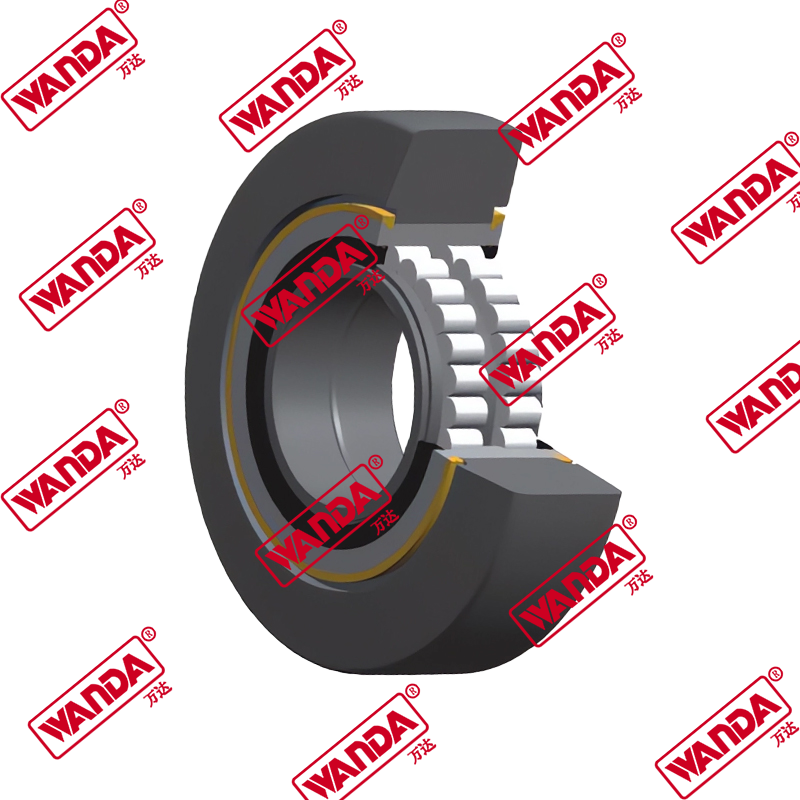
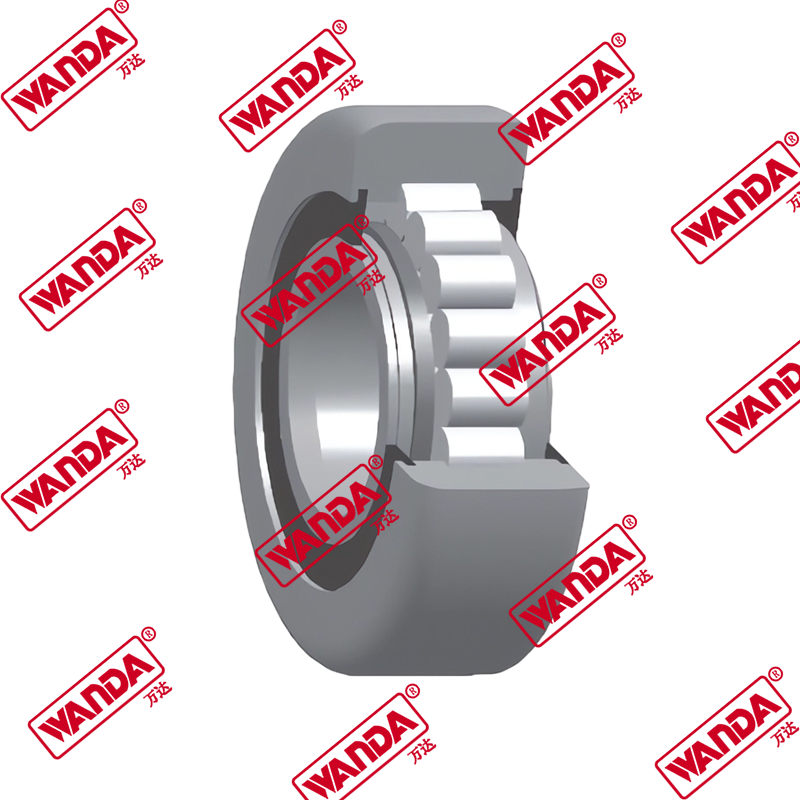
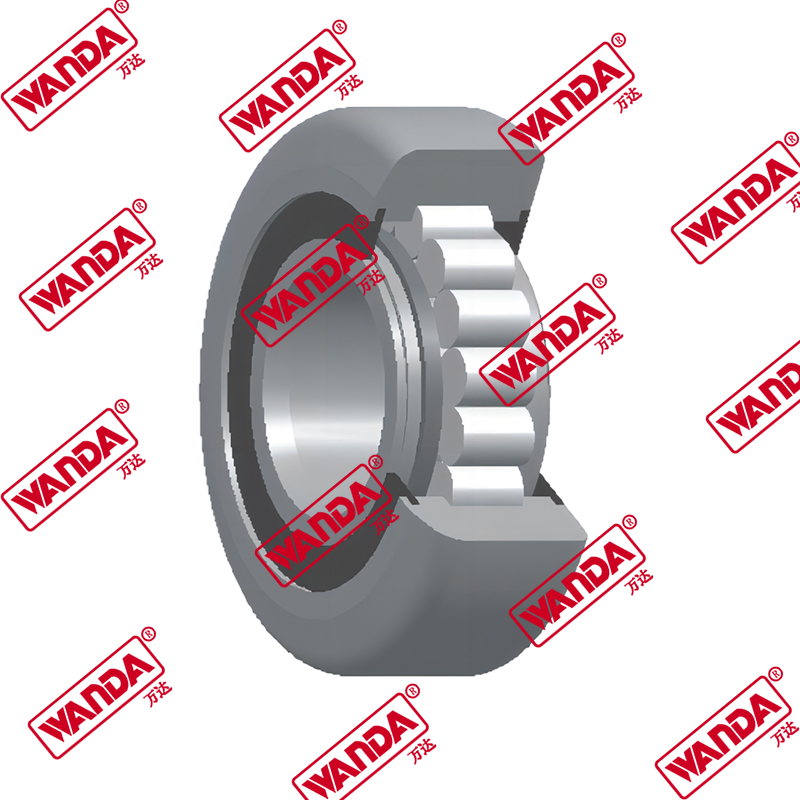
The versatility of cylindrical roller bearings stems from their diverse configurations of flanges (ribs) on the inner and outer rings. These variations determine whether a bearing can handle axial displacement or provide locating functions in one or both directions.
- NU Type: This design features two integral flanges on the outer ring and a smooth inner ring without flanges. It is a non-locating bearing, allowing the shaft to move axially relative to the housing in both directions. This is ideal for accommodating thermal expansion in long shafts.
- NJ Type: These bearings have two flanges on the outer ring and one on the inner ring. This configuration allows the bearing to provide axial location for the shaft in one direction.
- NUP Type: Equipped with two flanges on the outer ring and one integral flange plus one loose flange ring on the inner ring, NUP bearings act as locating bearings, fixing the shaft axially in both directions.
- N Type: The inverse of the NU design, with two flanges on the inner ring and a flangeless outer ring, allowing for axial displacement within the bearing itself.
Comparison of Cage Materials: Brass vs. Steel vs. Polyamide
The cage (or retainer) plays a vital role in maintaining the separation and alignment of the rollers. The choice of cage material significantly impacts the bearing’s speed rating, temperature limit, and vibration levels.
| Cage Material | High Speed Performance | Impact Resistance | Operating Temperature | Typical Application |
|---|---|---|---|---|
| Machined Brass | Excellent | Very High | -40°C to 250°C | Heavy Industry, Mining, Turbines |
| Pressed Steel | Good | High | Up to 300°C | General Machinery, Automotive |
| Polyamide (Nylon) | Superior | Moderate | -40°C to 120°C | Precision Instruments, Small Motors |
Machined brass cages are frequently selected for demanding environments due to their self-lubricating properties and superior strength-to-weight ratio. Conversely, pressed steel cages are the standard for cost-effective, robust performance in high-temperature settings where specialized plastics might fail.
Precision Standards and Tolerance Classes (P0 to P2)
In the world of industrial manufacturing, precision is not just a metric; it is a requirement for reliability. Cylindrical roller bearings are produced according to international standards such as ISO 492 and DIN 620.
The most common class is P0 (Normal), suitable for standard industrial equipment. However, for high-speed spindles or precision CNC machinery, P6, P5, or even P2 classes are utilized. Higher precision classes offer tighter tolerances on the bore diameter, outside diameter, and running accuracy (radial runout). Reducing runout minimizes vibration and heat generation, which exponentially extends the fatigue life of both the bearing and the surrounding mechanical components.
Load Dynamics: Radial vs. Axial Capabilities
While primarily designed for radial loads, certain cylindrical roller bearing designs can accommodate incidental or light axial loads. For instance, the NJ and NUP types utilize the sliding friction between the roller ends and the ring flanges to manage axial forces. However, it is critical to note that the axial load-carrying capacity is strictly limited by the lubrication conditions and the resulting temperature rise at the flange-roller interface. Overloading axially can lead to “smearing” or galling, which is a common failure mode in improperly specified bearings.
Failure Analysis and Preventive Maintenance
Understanding why bearings fail is the first step toward achieving a zero-downtime manufacturing environment. The primary causes of failure in cylindrical roller bearings include:
- Improper Lubrication: Over 35% of bearing failures are attributed to either the wrong lubricant or insufficient quantity. In roller bearings, the lubricant must form a stable hydrodynamic film to prevent metal-to-metal contact.
- Contamination: Particulate matter acts as an abrasive, causing “pitting” and “spalling” on the raceways. High-quality seals and shields are essential in dusty environments like mining or cement production.
- Misalignment: Unlike spherical roller bearings, cylindrical types have very limited tolerance for misalignment. An angular deviation of more than a few minutes of arc can cause edge loading, drastically reducing the service life.
- Electrical Erosion: In electric motors, stray currents can arch through the bearing, creating “fluting” patterns that lead to premature failure.
Manufacturing Excellence: Heat Treatment and Material Purity
The longevity of a cylindrical roller bearing begins in the forge. High-carbon chromium steel (GCr15/SAE 52100) is the industry standard. However, the secret to high-performance bearings lies in the heat treatment process. Martensitic or bainitic hardening ensures the rings have the necessary hardness (typically HRC 58-64) while maintaining core toughness to resist shock loads. Furthermore, oxygen content in the steel must be kept to a minimum (less than 9 ppm) to prevent sub-surface fatigue cracks.
Technical Comparison: Cylindrical vs. Needle Roller Bearings
Engineers often face the choice between cylindrical and needle roller bearings. While both use rollers, the aspect ratio (length to diameter) is the differentiator.
- Cylindrical Roller Bearings offer higher speed ratings and can handle much larger radial loads due to larger roller diameters.
- Needle Roller Bearings are optimized for space-constrained applications where radial height is at a premium, though they generally lack the axial locating capabilities of NJ/NUP cylindrical designs.
FAQ Section
1. Can cylindrical roller bearings handle axial loads?
Only specific designs like NJ, NUP, and HJ types can handle axial loads. They manage these forces through the contact between the roller ends and the ring flanges. However, these loads should be light to moderate, as excessive axial force can cause friction-related damage.
2. What is the difference between an NU and an N type bearing?
An NU type has flanges on the outer ring and a smooth inner ring, whereas an N type has flanges on the inner ring and a smooth outer ring. Both allow for axial displacement, but the choice depends on whether the shaft or the housing needs to be the “floating” component.
3. Why choose a brass cage over a steel cage?
Brass cages are preferred for high-speed, high-vibration, or poorly lubricated environments. They offer better friction characteristics and higher strength, though they are more expensive than pressed steel cages.
4. How does “Internal Clearance” affect bearing performance?
Internal clearance (e.g., C3, C4) is the total distance one ring can be moved relative to the other. Proper clearance accounts for thermal expansion during operation. If the clearance is too small, the bearing may seize; if too large, it may cause excessive noise and vibration.
5. What is “Smearing” in cylindrical roller bearings?
Smearing is a type of surface damage caused by the sliding of rollers under insufficient load or inadequate lubrication. It typically occurs in large bearings when the rollers accelerate into the load zone and “skid” rather than roll.
References
- ISO 492:2014 - Rolling bearings — Radial bearings — Geometrical product specifications (GPS) and tolerance values.
- Harris, T. A., & Kotzalas, M. N. (2006). Rolling Bearing Analysis: Concepts of Rolling Element Bearing Design. CRC Press.
- DIN 620-2 - Rolling bearing tolerances; tolerances for radial bearings.
- Zaretsky, E. V. (1992). STLE Life Factors for Rolling-Element Bearings. Society of Tribologists and Lubrication Engineers.
- Standard SAE 52100 - High Carbon Anti-Friction Bearing Steel Specifications.