
 English
 日本語
日本語
 русский
 Español
 عربى
عربى
 italiano
Content
What Is a Slewing Bearing?
A slewing bearing — also commonly called a slew bearing or slewing ring bearing — is a large-diameter rotary bearing designed to accommodate simultaneous axial, radial, and moment (tilting) loads while enabling slow-speed rotation between two structural elements. Where standard bearings support shafts rotating at hundreds or thousands of RPM, slewing bearings are engineered for continuous or intermittent rotation at typically less than 50 RPM, under very high loads, often in outdoor or hostile environments.
The defining characteristic of a slewing bearing is its large diameter relative to its cross-section. Rings range from roughly 100 mm in diameter for light industrial applications to over 10 meters for offshore platform turntables and large tunnel boring machines. This geometry allows the bearing to serve as the structural interface between two rotating assemblies — replacing what would otherwise require a complex combination of thrust bearings, radial bearings, and separate structural support frames.
The term "slewing" comes from nautical usage, meaning to rotate about a vertical axis — which describes the dominant load case in most applications: a horizontal platform or boom rotating around a central vertical axis while supporting substantial vertical and overturning loads.
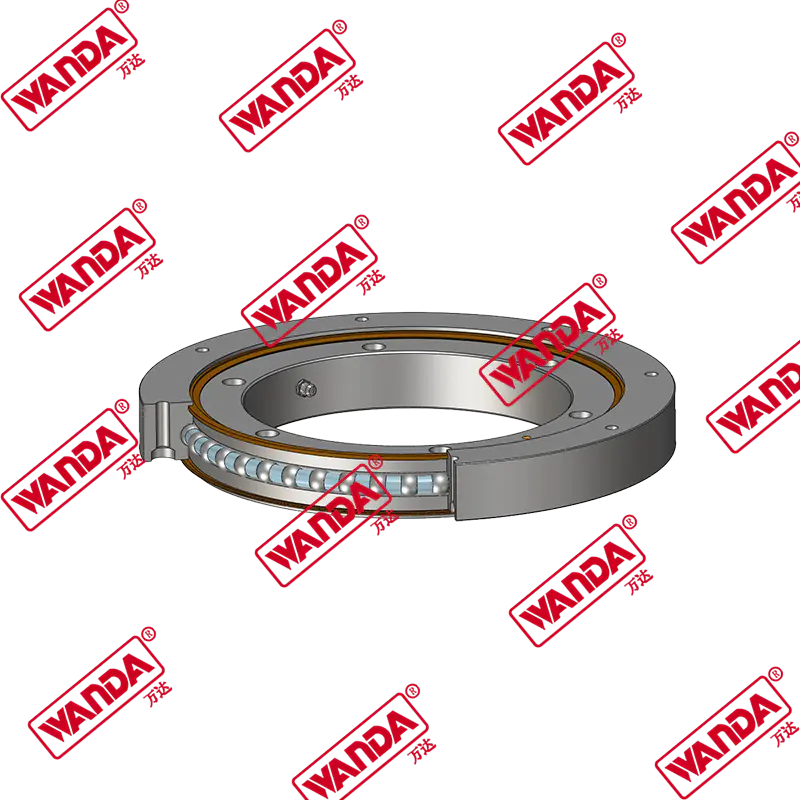
Slewing Ring Bearing Design: Races, Rolling Elements, and Gear Integration
Slewing ring bearing design centers on three integrated subsystems: the ring structure, the rolling element arrangement, and the integral gear. Understanding each explains why slewing bearings can handle load combinations that would destroy conventional bearings of comparable bore diameter.
Ring Structure and Raceways
A slewing bearing consists of an inner ring and an outer ring, each machined from medium-carbon alloy steel — typically 42CrMo4 or 50Mn — and induction-hardened at the raceways to surface hardness values in the range of 55–62 HRC. The rings are connected by a bolt circle pattern on each flange face, allowing direct bolting to the host structure without intermediate adapters.
The raceway geometry is profiled to match the rolling element type. Ball raceways are circular-arc ground to a conformity ratio that balances load capacity against friction; roller raceways are flat or logarithmically crowned to distribute load across the roller length and minimize edge stress concentration under moment loading.
Rolling Element Arrangements
The choice of rolling element and its arrangement within the bearing determines the load distribution across all three load axes:
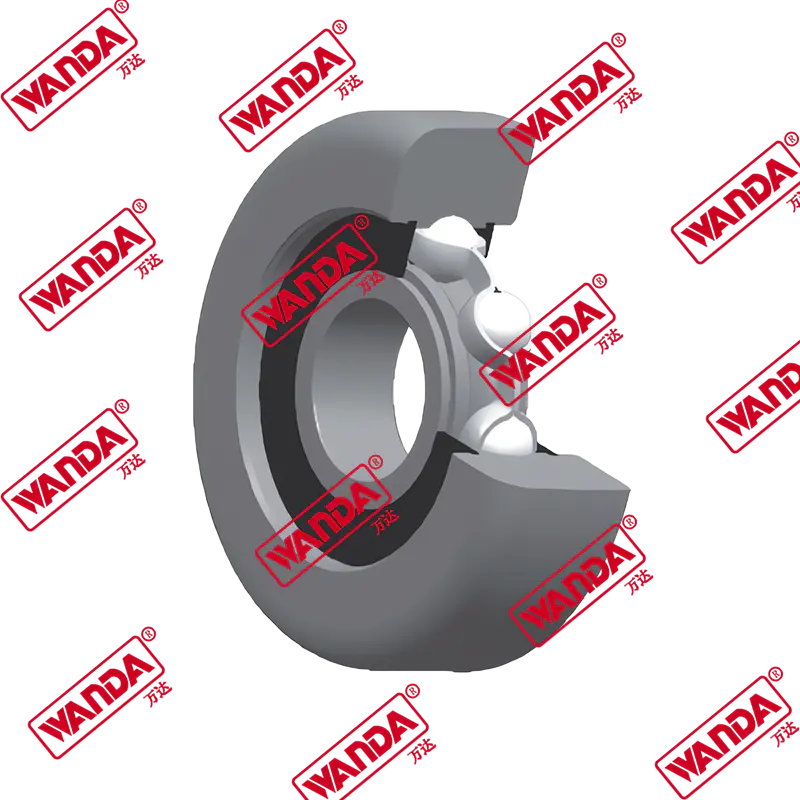
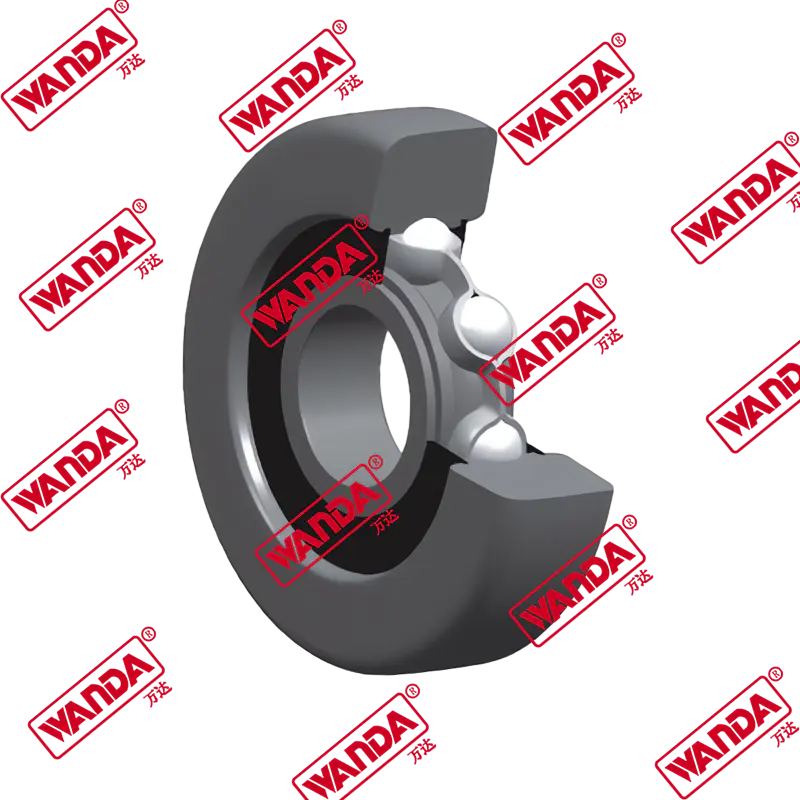
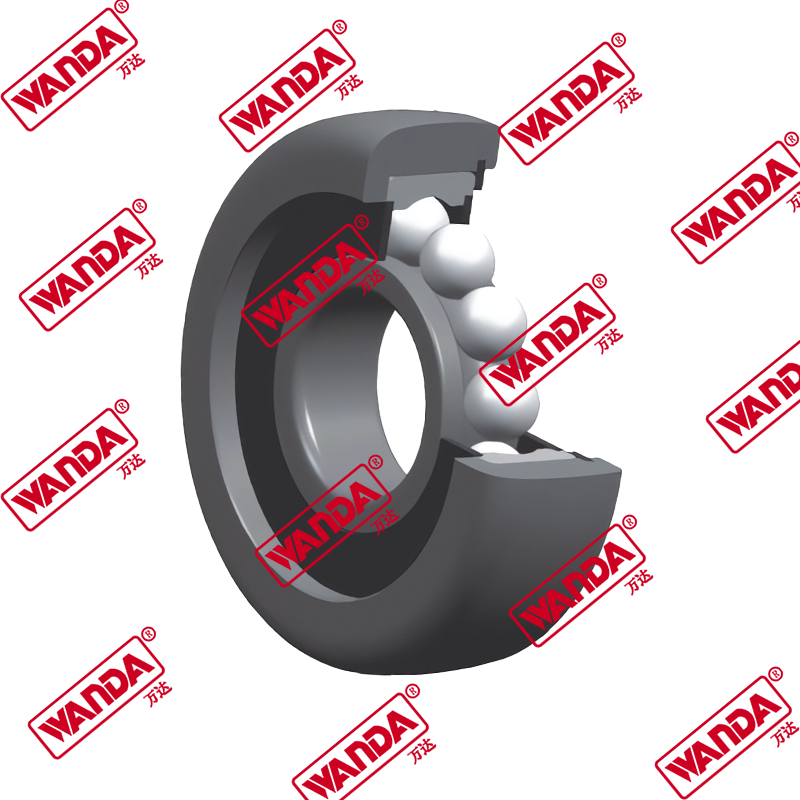
- Single-row four-point contact ball: The most common configuration. Each ball contacts the raceway at four points simultaneously, enabling one row to handle axial load in both directions, radial load, and moment load. Compact and cost-effective for moderate combined loads.
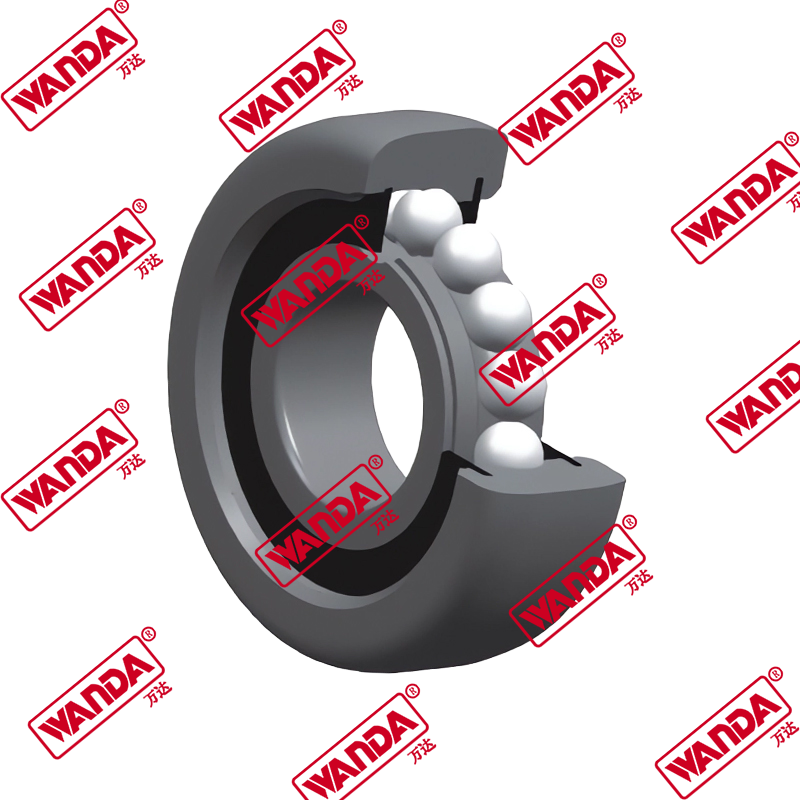
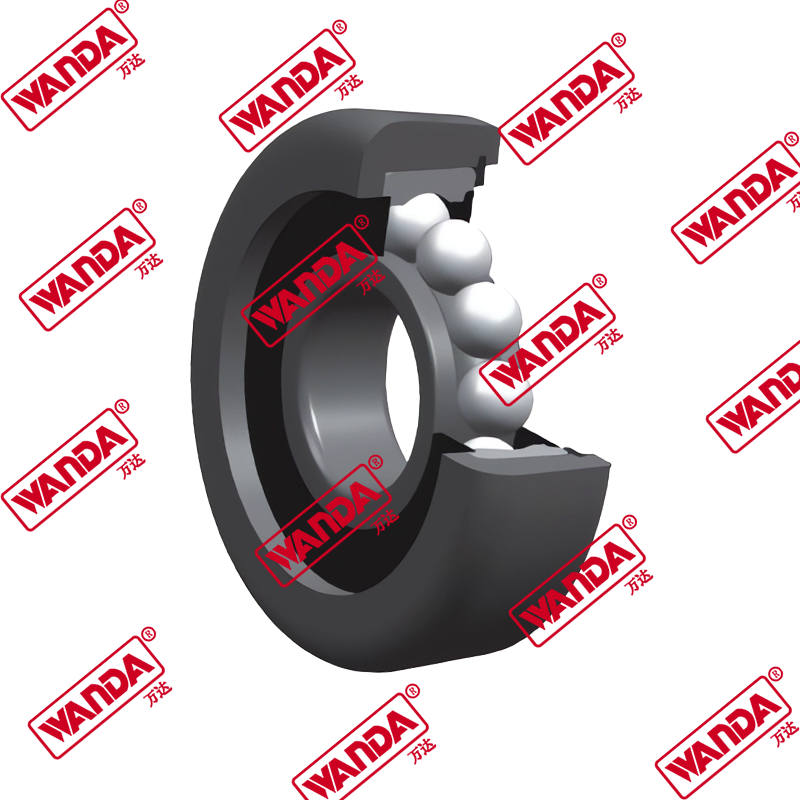
- Double-row ball: Two rows of balls, typically with opposed contact angles, provide higher axial and moment capacity than a single row while maintaining a relatively thin cross-section. Used where overturning moments are the dominant load.
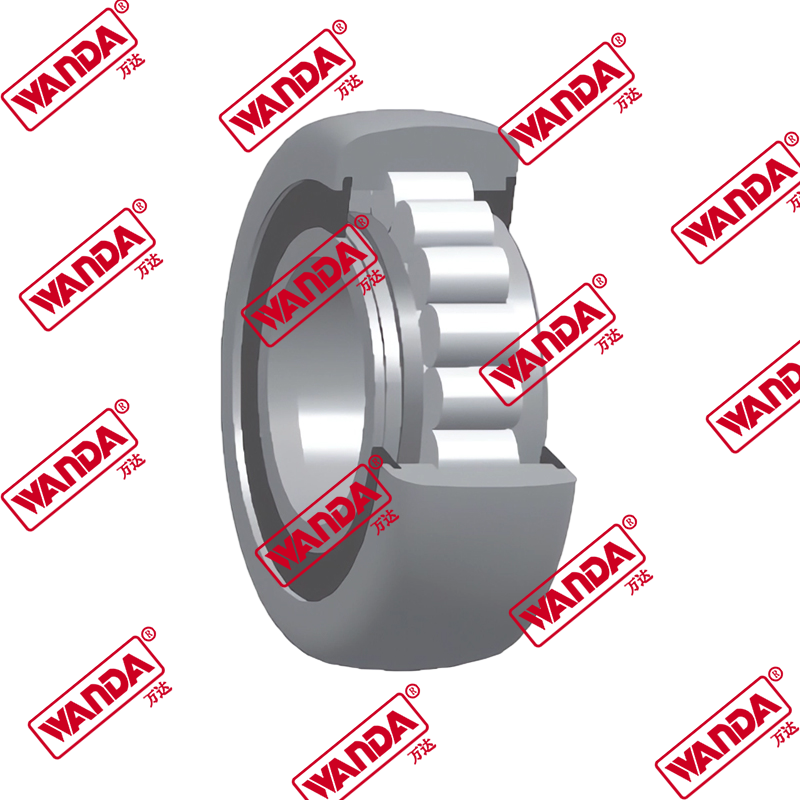
- Three-row roller: Separate rows of cylindrical rollers handle axial load (two rows, one per direction) and radial load (one row) independently. This separation allows each row to be optimized for its specific load direction, resulting in the highest overall load capacity of any slewing bearing configuration. Typical in large cranes, offshore equipment, and shield tunneling machines.
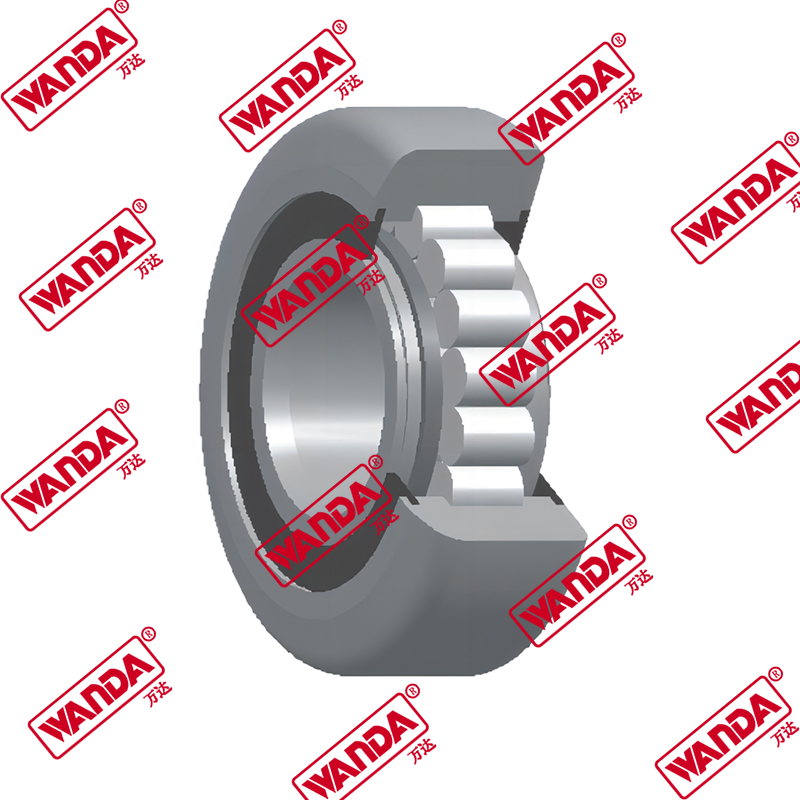
- Cross-roller: Rollers alternated at 90-degree orientations within a single row, achieving four-direction load handling in a very compact axial envelope. Common in robotics, rotary tables, and medical imaging equipment.
Integral Gear
Most slewing bearings incorporate a gear — cut directly into the outer or inner ring circumference — that meshes with a drive pinion to produce powered rotation. This integration eliminates the need for a separate bull gear and simplifies the drivetrain layout of the host machine. Gear options include:
- External gear on the outer ring — the most common arrangement; the drive pinion is positioned outside the bearing envelope, keeping the center clear for cable routing or structural connections.
- Internal gear on the inner ring — the pinion drives from inside the ring, producing a more compact overall diameter for the rotating assembly.
- No gear (gearless) — for applications using friction drives, hydraulic motors with direct coupling, or where rotation is unpowered (free-slewing pedestals, turntables).
Gear teeth are typically module 4–20 depending on bearing diameter and torque requirement, and are cut to DIN 3960 or equivalent tolerances. Hardening of the gear teeth is applied selectively — induction hardening on high-cycle applications, left soft on slow-cycle equipment where machinability for field repair is prioritized.
Sealing and Lubrication
Slewing bearings operate at low speeds where hydrodynamic lubrication films do not form, making the quality of grease lubrication the primary determinant of raceway life. Most designs incorporate two-lip contact seals — one facing outward to exclude contamination, one facing inward to retain grease — running in seal grooves machined into both ring faces. Grease fittings are positioned at intervals around the circumference, and the bearing must be rotated during re-greasing to ensure full raceway coverage. Lithium-complex or polyurea greases with EP (extreme pressure) additives and NLGI Grade 2 consistency are standard for most operating conditions.
Slewing Bearing Types Compared
| Type | Rolling Element | Load Capacity | Best For |
|---|---|---|---|
| Single-row four-point contact ball | Ball | Moderate | General-purpose: excavators, light cranes, solar trackers |
| Double-row ball | Ball | Medium–High | High moment loads: truck cranes, aerial work platforms |
| Three-row cylindrical roller | Cylindrical roller | Very High | Heavy industry: offshore cranes, TBMs, port machinery |
| Cross-roller | Crossed cylindrical roller | Medium | Precision, compact envelope: robotics, CNC rotary tables |
Where Slewing Bearings Are Used
Slewing bearings appear wherever a large rotating joint must carry combined loads without a conventional shaft-and-housing arrangement. Major application sectors include:
- Construction and lifting equipment: Mobile cranes, tower cranes, crawler cranes, and hydraulic excavators all use slewing bearings at the upperstructure-to-undercarriage joint — typically the most highly loaded bearing in the machine.
- Wind energy: Each wind turbine requires at least two slewing bearings — one for the yaw system (rotating the nacelle to face the wind) and one or more for the pitch system (adjusting blade angle). A single onshore turbine may carry slewing bearings ranging from 2 to 4 meters in diameter.
- Offshore and marine: Pedestal cranes, davits, rotating deck equipment, and offshore drilling turntables rely on slewing bearings engineered for salt spray, shock loads, and continuous operation without access for routine maintenance.
- Defense and radar systems: Gun turrets, radar antenna pedestals, and missile launcher platforms use precision slewing bearings where angular positioning accuracy and resistance to shock and vibration are critical requirements alongside load capacity.
- Medical imaging: CT scanner gantries and radiation therapy positioning systems use cross-roller slewing bearings for their combination of compact cross-section, high stiffness, and smooth, low-noise rotation.
- Industrial automation: Rotary indexing tables, robot base joints, and automated welding positioners use slewing bearings as the primary structural and rotational element, often with integral encoders or torque motor stators mounted directly to the ring.
The common thread across all these applications is the need to replace a complex multi-bearing arrangement with a single integrated component that simultaneously handles structural loads, enables rotation, and — in geared variants — transmits drive torque. That combination of functions in one compact ring is what makes slewing bearings indispensable in modern heavy machinery design.