
 English
 日本語
日本語
 русский
 Español
 عربى
عربى
 italiano
A forklift chain pulley that exceeds 1 percent wear on the pitch diameter or shows 0.5 mm of chain link seating wear must be replaced immediately. Continuing to run a worn pulley accelerates leaf chain elongation by 35 percent and can cause the mast to drop under load. A forged and hardened alloy steel pulley with a surface hardness of HRC 45 to 52 and case depth of 3 to 5 mm outlasts a standard cast iron pulley by a factor of four in high-cycle applications.
Content
- 1 The Mechanical Role of a Forklift Chain Pulley in the Mast System
- 2 Material and Heat Treatment Specifications
- 3 Wear Limits and When to Replace a Forklift Chain Pulley
- 4 Lubrication and Bearing Maintenance Intervals
- 5 Step-by-Step Replacement of a Forklift Chain Pulley
- 6 Common Failure Patterns and Their Root Causes
The Mechanical Role of a Forklift Chain Pulley in the Mast System
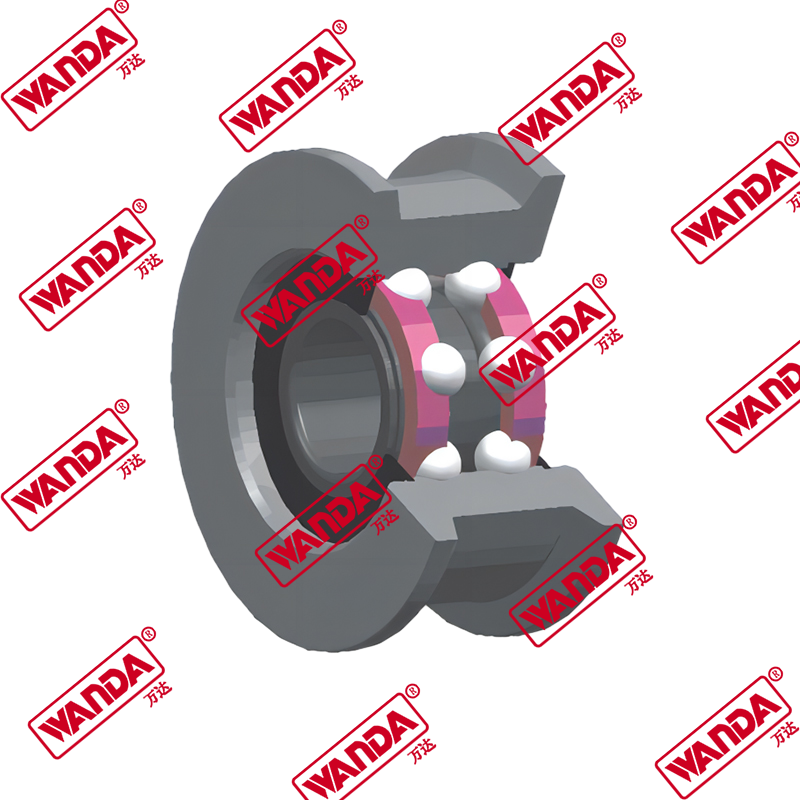
A forklift chain pulley is a sheave that guides the leaf chain as it transmits the lifting force from the hydraulic cylinder to the carriage. In a typical two-stage mast, there are two pulleys mounted at the top of the inner mast channels. The chain runs over these pulleys, with one end anchored to a fixed point on the outer mast and the other end attached to the carriage. When the cylinder extends, the chain is pulled over the pulleys, and the carriage rises at twice the speed of the cylinder rod.
The forklift chain pulley is not simply a direction-changing device. It bears the full tension load of the chain multiplied by a factor determined by the reeving arrangement. For a single-chain system carrying a rated load of 2,500 kg, the pulley experiences a radial load approaching 50 kN. The pulley must distribute this load across its bearing evenly to prevent brinelling and must maintain precise alignment to prevent the chain from twisting and wearing unevenly.
Material and Heat Treatment Specifications
The material choice for a forklift chain pulley determines its resistance to wear, brinelling, and fatigue cracking. The table below compares the three most common pulley materials and their performance characteristics in a standard 2,500 to 3,500 kg capacity forklift.
| Material | Surface Hardness (HRC) | Case Depth (mm) | Typical Service Life (hours) |
|---|---|---|---|
| Forged Alloy Steel (e.g., 42CrMo4) | 45 to 52 | 3.0 to 5.0 | 10,000 to 15,000 |
| Cast Steel (Heat-Treated) | 35 to 42 | 2.0 to 3.0 | 6,000 to 8,000 |
| Cast Iron (As-Cast) | Less than 20 | No defined case | 2,000 to 4,000 |
Forged alloy steel is the standard for forklift chain pulley applications where the lift truck operates more than 1,500 hours per year. The forging process aligns the grain flow with the contour of the pulley, eliminating the internal voids and inclusions that can initiate fatigue cracks. After machining, the pulley is induction hardened on the chain contact surfaces to produce a wear-resistant case while maintaining a tough, ductile core. This combination prevents both surface wear and catastrophic fracture.
Wear Limits and When to Replace a Forklift Chain Pulley
A forklift chain pulley wears in two primary ways: the bore diameter of the bearing increases, and the chain pocket profile changes shape. Each failure mode has a quantifiable discard limit.
- Pitch diameter wear: When the chain seats deepen by more than 0.5 mm from the original profile, the chain pitch no longer matches the pulley pitch. This mismatch generates impact loads at each chain link entry and exit, increasing chain wear rate by 35 percent and creating a rough, jerky lift motion. The pulley must be replaced if the pitch diameter has decreased by 1 percent or more of the original value.
- Bearing bore wear: The needle roller bearing or bushing inside the pulley must maintain a radial clearance of 0.02 to 0.06 mm. When the clearance exceeds 0.15 mm, the pulley wobbles on its shaft, causing the chain to track off-center and wear the pulley flange. A pulley with an oval or oversized bore cannot be repaired and must be scrapped.
- Flange wear: The side flanges that guide the chain should have a thickness variation of no more than 0.3 mm from top to bottom. Worn flanges allow the chain to wander, which can cause the chain plates to ride up on the flange edge and cut into the pulley body.
Lubrication and Bearing Maintenance Intervals
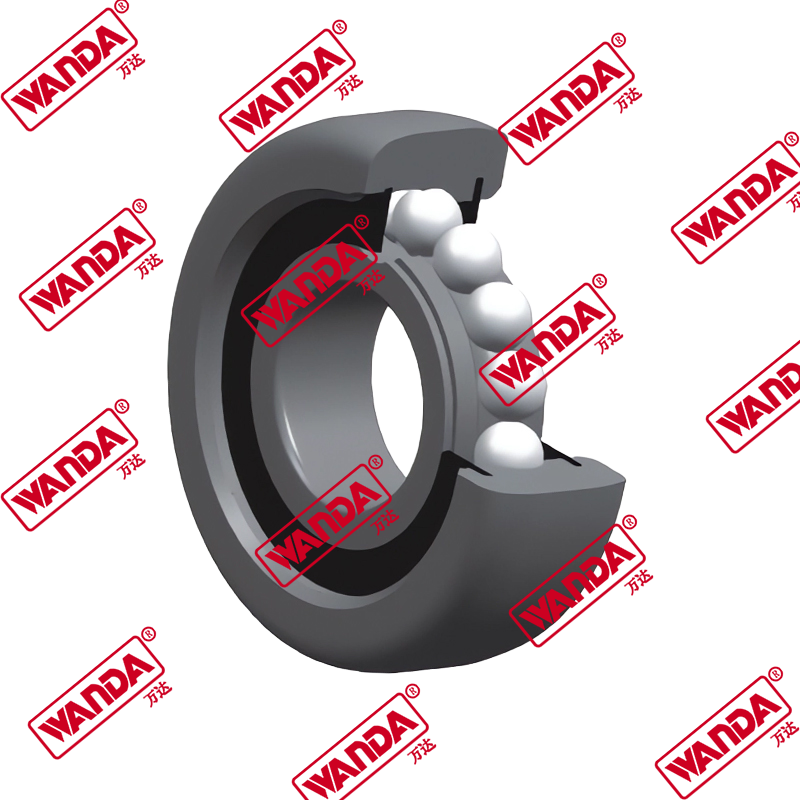
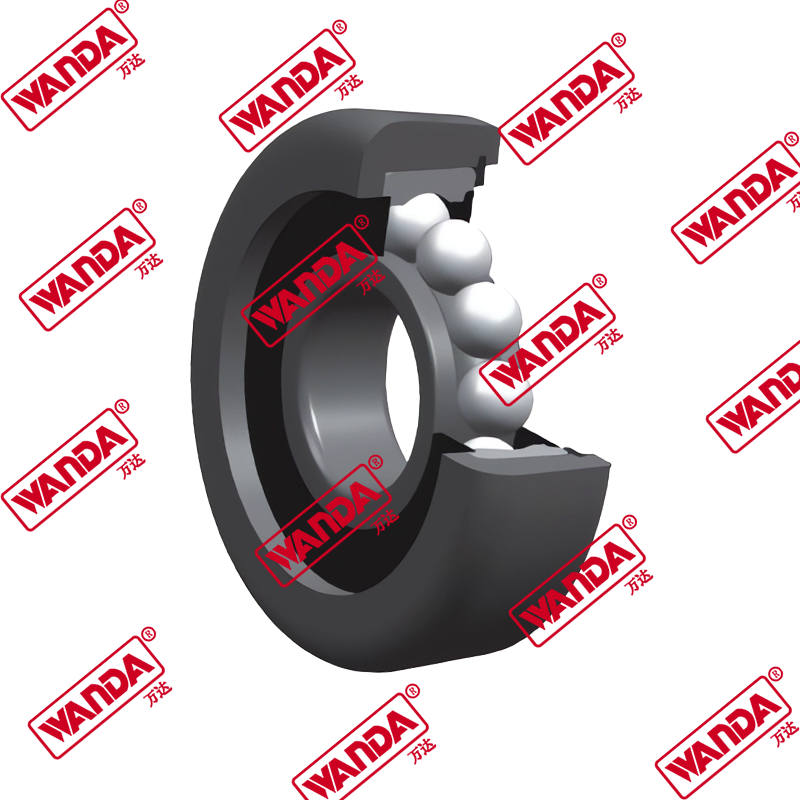
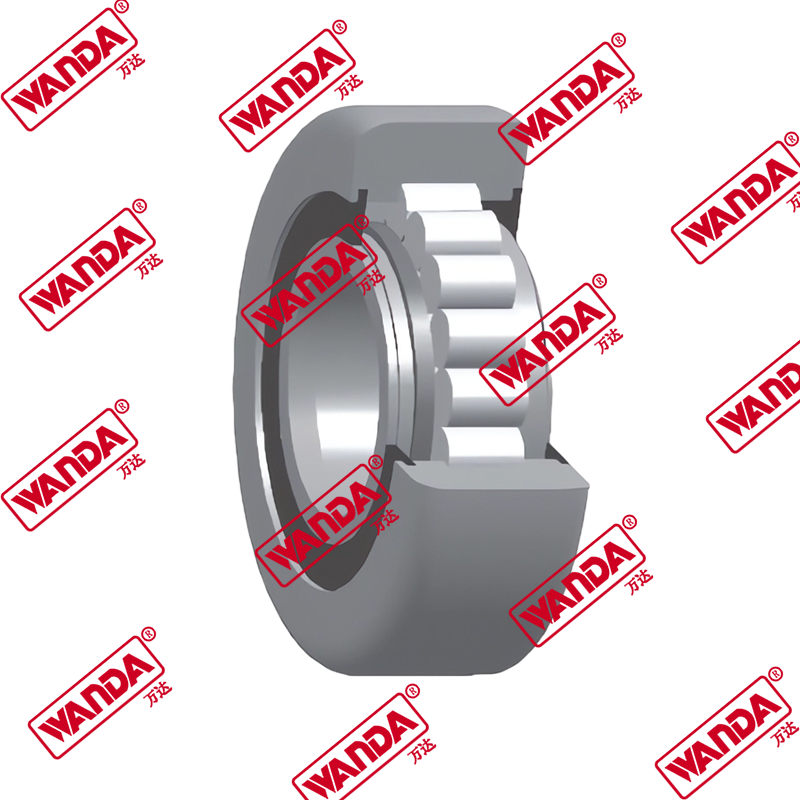
The bearing inside a forklift chain pulley is typically a drawn-cup needle roller bearing that relies on a film of grease to prevent metal-to-metal contact between the rollers and the shaft. Relubrication should be performed every 500 operating hours using a lithium-based EP2 grease with a base oil viscosity of 100 to 150 centistokes at 40 degrees C.
When greasing the forklift chain pulley bearing, the old grease must be purged out through the seals. Pump fresh grease slowly until clean grease appears at the seal lips. Overgreasing with a high-pressure gun can displace the bearing seals and allow dirt to enter. A grease gun that delivers 0.9 grams per stroke should be limited to three to five strokes per bearing per interval. After greasing, rotate the pulley by hand through three full revolutions to distribute the lubricant evenly.
Step-by-Step Replacement of a Forklift Chain Pulley
Replacing a forklift chain pulley is a task that must be completed with the mast fully lowered and the carriage blocked to prevent movement. The following sequence ensures that the new pulley is installed correctly and that the chain tension is balanced.
- Lower the mast completely and place two steel blocks of equal height under the carriage to support its weight. Do not rely on the hydraulic system to hold the carriage during the repair.
- Remove the chain anchor bolt at the fixed end of the chain. Slowly release the chain tension and lay the chain out without twisting it.
- Remove the pulley shaft retaining bolt and extract the shaft. The old forklift chain pulley can now be lifted out of the mast channel.
- Inspect the shaft for scoring or fretting. Replace the shaft if its diameter at the bearing journal is more than 0.02 mm undersize.
- Install the new pulley with a fresh bearing. Press the bearing into the bore using a mandrel that contacts the outer race, never the inner ring.
- Reinstall the chain, ensuring that the chain plates are oriented with the open ends facing away from the pulley. Adjust the chain anchor to achieve an even tension on both chains, with a sag of no more than 10 mm at the midpoint of the free span.
Common Failure Patterns and Their Root Causes
A forklift chain pulley that fails prematurely almost always reveals a specific maintenance or operational deficiency. The most common patterns and their causes are as follows.
- Brinnelled bearing races: Regular indentations at the roller spacing indicate that the forklift has been operated with an unlubricated or dry bearing. Once the race is brinnelled, the pulley runs rough and transmits vibration to the chain, accelerating link plate fatigue.
- Spalling on the chain seat: Flaking or pitting on the curved surface where the chain links sit is caused by insufficient case depth or inadequate heat treatment. A spalled forklift chain pulley must be replaced immediately because the surface debris can embed in the chain links and cause them to crack.
- Uneven flange wear: Wear on one flange only indicates that the pulley shaft is not perpendicular to the mast channel. The misalignment can be caused by a bent shaft, worn shaft mounting holes, or a mast channel that has spread outward from side impact. The shaft mounting must be restored to its original alignment before a new pulley is installed.